


One recurring theme I’ve seen across temporary works over the years is how much hinges on the quality of the design brief. A clear and complete brief sets the project up for success, while a weak one introduces avoidable risk and delay from the outset.
Across much of the industry, temporary works are still treated as “the first thing required and the last thing thought about”. As a result, we see a familiar pattern repeat itself. Under time pressure, project teams and supply chain partners pull briefs together quickly, focusing on getting something issued rather than ensuring the information is complete, coordinated, and genuinely usable for those designing, checking, and installing the works.
The problem is that an incomplete brief doesn’t sit quietly, it creates uncertainty. And that uncertainty often manifests far later in the process, when the cost and safety impact are far greater.
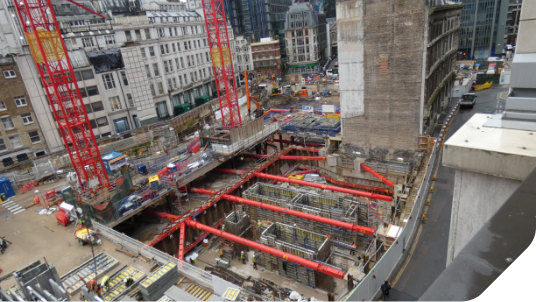
Many of the issues we end up resolving on-site do not originate there. They begin much earlier, with a lack of clarity at the briefing stage.
When information is missing, unclear or based on assumptions, we see the same consequences time and time again:
A poor brief doesn’t just affect design quality, it weakens the entire temporary works process from the outset.
One of the most common issues is briefs that try to describe a preferred solution instead of clearly defining the constraints that should guide the engineering response.
Information such as:
…are far more valuable to an engineer than prescribing how the temporary works should be delivered. Without that clarity, the engineer is often asked to validate an assumed approach rather than develop the most appropriate one. When that happens, the brief stops being a tool for control and instead becomes a source of uncertainty.


As a Chartered Engineer and ICE assessor, one of the core skills sets I value most is effective communication. It is the attribute that links technical competence, coordination of tasks and resources, and sound decision-making. Crucially, it is also fundamental to communicating risk effectively, ensuring that hazards, assumptions, and constraints are clearly understood at the outset, rather than discovered under pressure on-site.
In temporary works, effective communication means ensuring that critical information is shared clearly and appropriately so that those defining the requirement, designing the solution, checking it, coordinating the process or delivering it on site are all working from the same understanding. The design brief is the mechanism that makes that possible.
When briefs are structured, complete and clear, projects move more efficiently and risks are reduced significantly. When they aren’t, avoidable doubt is introduced from the very beginning.
Improving safety isn’t always about what happens on site. Some of the most meaningful safety improvements come from earlier in the process, through better communication, and clearer expectations.
‘If we want safer, more efficient temporary works, we must give the briefing stage the same discipline and attention we expect from design and execution’.
Whether you have a question, need a quote, or want to discuss a project, our dedicated team is ready to assist you.